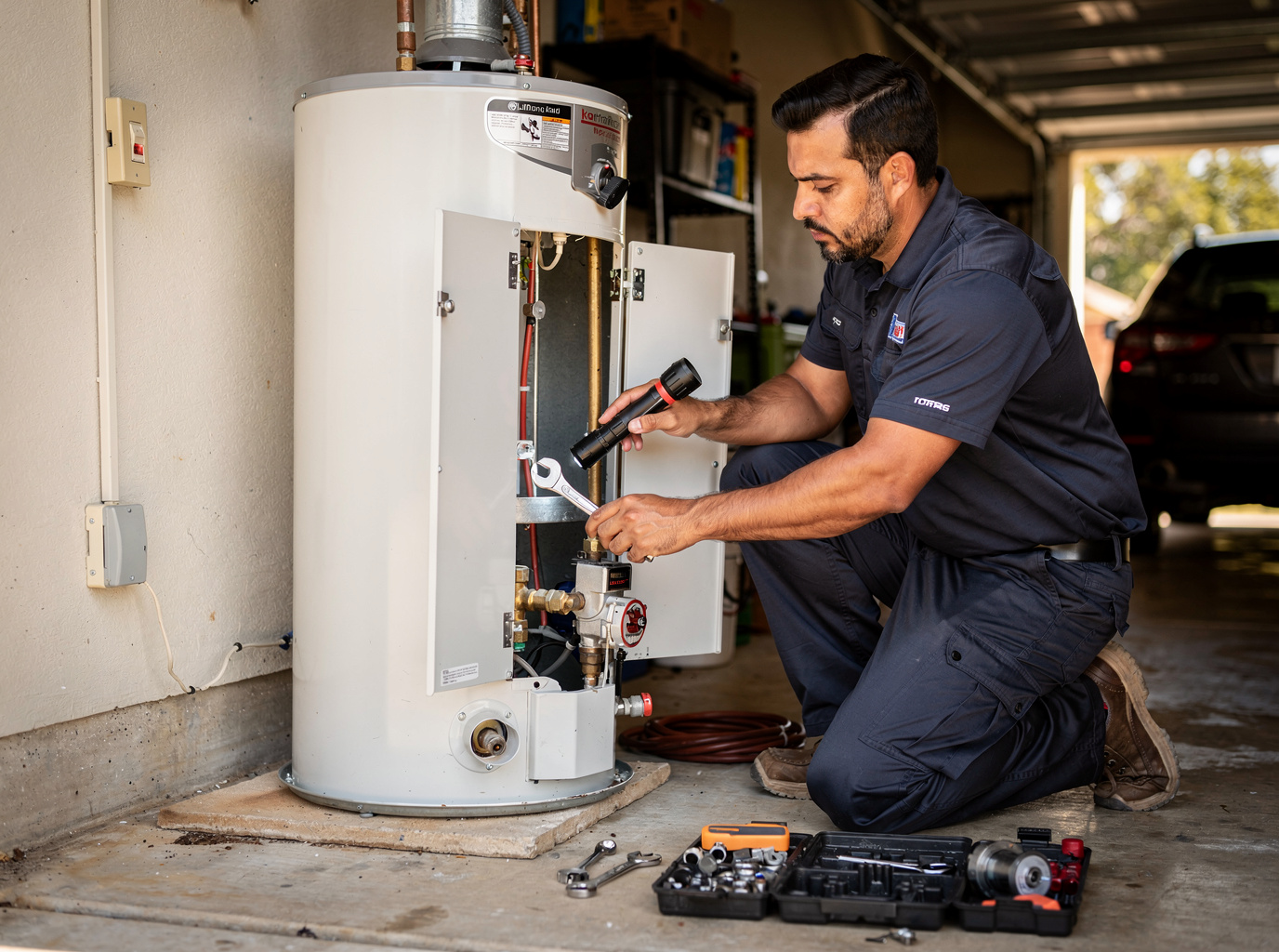
Brushy Creek sits along the waterway that gives the neighborhood its name, with homes built mostly from the mid-1990s onward in subdivisions off Brushy Creek Boulevard and Great Oaks Drive. Water heater access can be tight in these single-story and two-story layouts because many garages sit at the rear and lots slope toward the creek. Providers we connect you with know the quickest routes from the 1507 Chisholm Trail Rd base to reach these streets without crossing the busy stretches of RM 620 during morning school runs.
Hot summers and occasional heavy rains in Williamson County speed up sediment buildup in tanks, especially in homes near the Brushy Creek Regional Trail where soil stays damp. Mild winters still produce enough temperature swings to stress older units installed when the first sections of the neighborhood were developed. Local providers we connect you with carry the right parts for both gas and electric models common on these blocks and can work around the limited side-yard access found on many cul-de-sacs.
Residents near Brushy Creek Elementary and the adjacent park often deal with higher mineral content in the water that shortens anode rod life. Providers we connect you with check venting clearances on homes that back up to greenbelts and coordinate around the trail foot traffic when equipment must be carried in.
Around Brushy Creek
We regularly work near:
- 📍Brushy Creek Elementary School
- 📍Brushy Creek Park
- 📍Brushy Creek Regional Trail
- 📍Great Oaks Drive
- 📍Brushy Creek Boulevard
Plumbing in Brushy Creek — Local Notes
- •Many Brushy Creek homes from the 1990s have water heaters tucked in narrow utility closets with low doorways, requiring compact replacement units.
- •Creek-side lots experience occasional drainage backup after heavy rain, so providers check for proper condensate lines and elevation on new installs.
- •Access to rear yards is limited on cul-de-sacs like those off Great Oaks Drive, so smaller service vehicles are often needed.
- •Hot summers increase sediment in tanks faster here than in drier parts of Williamson County, shortening typical flush intervals.