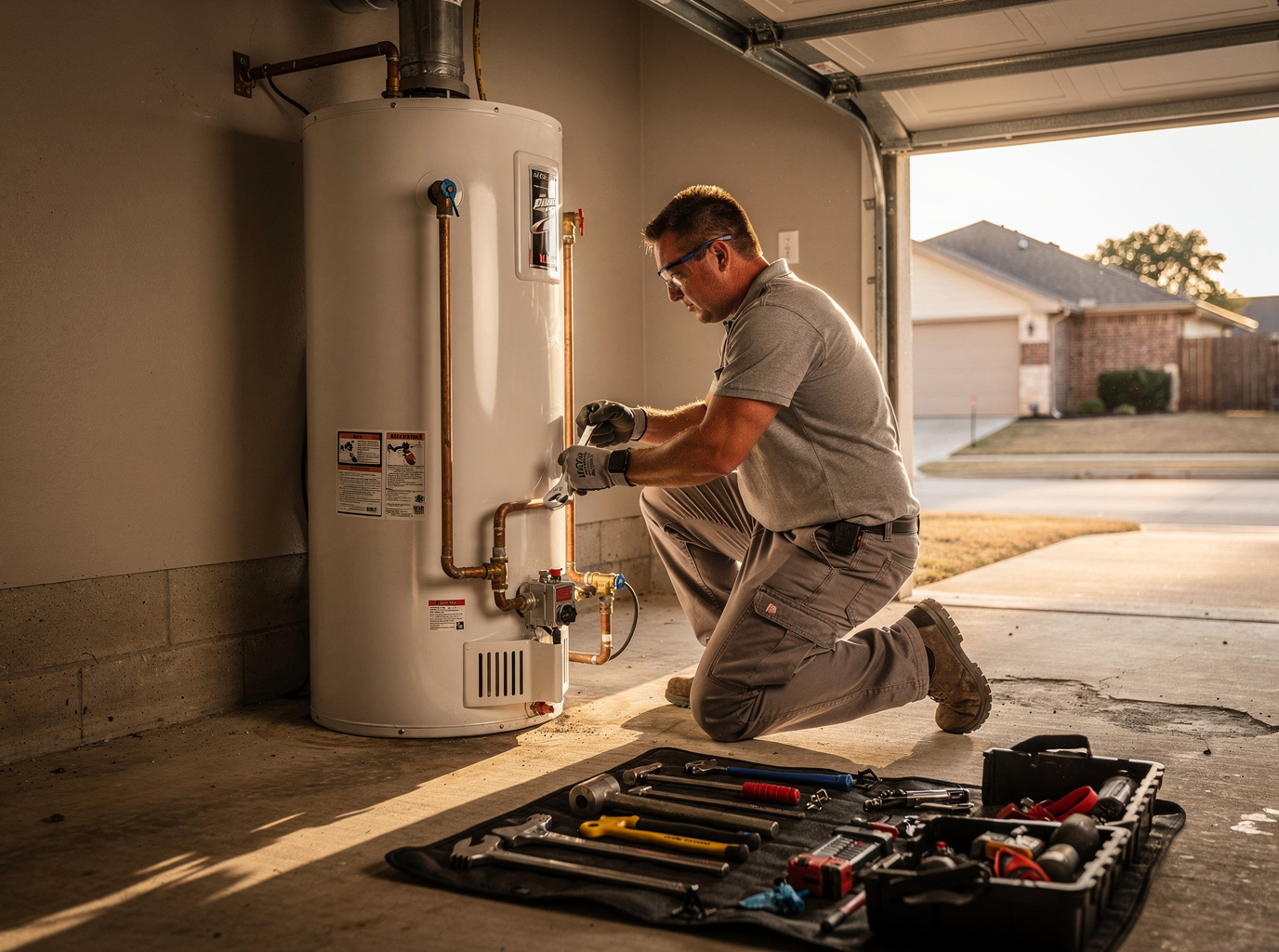
Round Rock's housing mix ranges from newer builds in Teravista and Forest Creek to older stock in Old Town and Downtown Round Rock. Providers we connect you with assess existing venting, gas line sizing, and electrical service before any swap. Hot summers accelerate sediment buildup in tanks, while mild winters still allow scale from local water chemistry to affect efficiency over time. Proper seismic strapping and expansion tank placement matter on slab foundations common here.
Installation often requires coordination with Williamson County permitting when moving from tank to tankless units. Providers check for adequate combustion air in utility closets near living spaces and verify that new units meet current energy code setbacks from property lines. In neighborhoods close to Dell Diamond or Old Settlers Park, access for larger equipment can be tight, so planning the removal path prevents damage to landscaping or driveways.
Nearby cities like Austin, Pflugerville, and Cedar Park share similar water quality challenges, yet Round Rock's specific soil conditions can affect underground supply lines during replacement. Providers we connect you with pressure-test new lines and insulate exposed piping against occasional winter dips. They also confirm that the chosen model fits the available space without blocking access to other mechanicals.
Common Installation Challenges in Williamson County
Providers evaluate attic and garage placements for clearance and ventilation needs specific to local humidity levels. They also review shared walls in townhomes around the Round Rock Premium Outlets area to ensure noise isolation meets community standards.
Technician insight
In Round Rock, the thing that catches most people out with Water Heater Installation is underestimating how quickly sediment from Williamson County water builds up in older Downtown and Old Town homes during the long hot summers; skipping a full flush of the supply line before the new unit goes in often leads to early element or valve failure.
Tank to Tankless Swap in Forest Creek
Homeowners in a Forest Creek residence needed more hot water capacity during peak summer use. Providers found the existing tank was undersized and venting was undersized for a high-efficiency model. They ran a new dedicated gas line and installed a properly vented tankless unit on an exterior wall, restoring full flow without attic heat gain issues.
How it works
- 1
Site Assessment
Providers measure existing connections, note venting routes, and check gas or electric supply capacity at the Round Rock address.
- 2
Permit and Model Selection
They review Williamson County requirements and recommend units sized for household demand and local water conditions.
- 3
Removal and Preparation
Old unit is disconnected safely, lines flushed, and space prepared while protecting surrounding finishes.
- 4
New Unit Placement and Connection
Unit is set, anchored, and tied into water, gas or electric, and venting with proper slope and supports.
- 5
Testing and Handover
System is pressurized, leaks checked, temperature set, and homeowner shown controls and maintenance points.
Pricing
Final cost depends on unit type, access difficulty, and any required line upgrades or permits.